
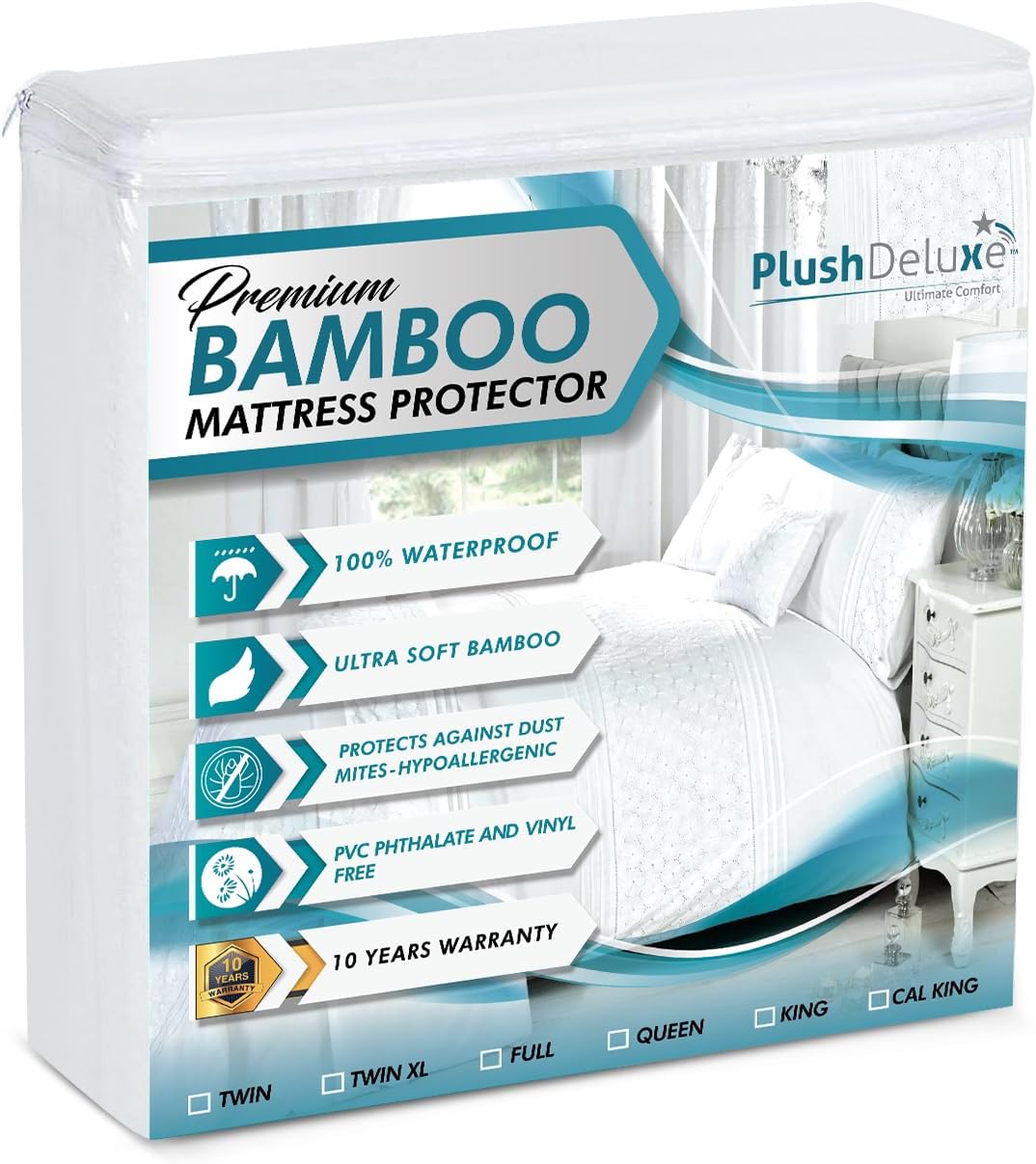
Waterproof And Bamboo Mattress Protectors
Everything this shop sells, grouped by what it is for. Prices are in Australian dollars, and free delivery starts at $75.
Jump to a section: Mattress Protectors · Accessories · Carbon Offset

Carbon Offset
An optional $11 offset you can add to any order.

The Complete Truth About Waterproof Mattress Protectors (And Why Water-Resistant Isn't Good Enough)
Let's start with a question most people get wrong: what's the difference between waterproof and water-resistant? If you answered "not much" or "basically the same thing," you're in good company. Most people assume these terms are interchangeable. Marketing departments love this confusion because it lets them slap "water-resistant" on cheap products and hope you don't notice the difference until it's too late. Here's the actual difference, and why it matters for your mattress: water-resistant means it'll slow down liquid for a bit before eventually soaking through. Waterproof means liquid doesn't get through, period. It's the difference between an umbrella and a raincoat. Sure, an umbrella helps in light rain, but in a downpour? You're getting wet. A proper raincoat keeps you dry no matter what. Your mattress deserves a raincoat, not an umbrella.What Happens to an Unprotected Mattress
Before we talk about waterproof bed protectors, let's talk about what you're actually protecting against. Every night, your body releases about half a liter of sweat. You don't notice it because your sheets absorb most of it, but here's the thing: sheets aren't waterproof. That moisture goes straight through to your mattress. Multiply that by 365 nights, and you're looking at nearly 200 liters of sweat soaking into your mattress every year. That's not a typo. Your mattress is basically a giant sponge absorbing everything you throw at it. Now add the occasional spill. Coffee in bed on Sunday morning. A glass of water on the nightstand that gets knocked over at 3am. Wine while watching a movie. Kids with juice boxes. Pets with questionable bladder control. Without protection, all of this goes straight into your mattress where it: Creates a breeding ground for bacteria and mold. Moisture plus warmth plus organic matter equals microbial paradise. Attracts dust mites by the millions. These microscopic creatures thrive in moist environments and feed on dead skin cells. A used mattress without protection can house anywhere from 100,000 to 10 million dust mites. Check the fine print on any mattress warranty. Stains void coverage, full stop. One spill, one accident, and your thousand-dollar warranty is worthless. Degrades the mattress materials faster. Foam, springs, fabric - none of these materials are designed to handle constant moisture exposure. They break down, lose support, and fail years before they should. The worst part? You usually don't realize how bad it's gotten until you flip or move your mattress and see the yellowing, the stains, the general nastiness that's been accumulating underneath you.The Technology Behind Real Waterproof Protection
Here's where things get interesting. For most of history, "waterproof mattress protector" meant sleeping on what felt like a plastic shower curtain. They worked, sort of, but they were hot, noisy, uncomfortable, and made you sweat even more. People had to choose between protecting their mattress and actually being able to sleep comfortably. Most chose comfort and crossed their fingers about spills. Then materials technology caught up. Modern waterproof bed protectors use advanced membranes - usually polyurethane - with microscopic pores. These pores are sized precisely: too small for water molecules to pass through, but large enough for air and water vapor. Think about how a high-end rain jacket works. You stay dry in a downpour, but you don't turn into a sweaty mess inside the jacket because moisture vapor can escape. Same principle, applied to mattress protection. The result is a protector that stops every drop of liquid while still breathing. No heat buildup. No waking up in a puddle of your own sweat. No crinkly plastic sounds every time you move. It's invisible protection in every sense: you can't feel it, can't hear it, and most of the time forget it's even there.Water-Resistant vs. Waterproof: Why It Actually Matters
Let's get specific about what these terms mean in practice. A water-resistant mattress protector is typically treated with a coating that repels liquids temporarily. Picture those fabric sprays that make water bead up on shoes or furniture. It works for light moisture or very small spills that get cleaned up immediately. But here's what happens with a water-resistant protector: Spill a glass of water and don't notice for an hour? It's soaking through. Your kid has a nighttime accident? The liquid is getting to your mattress. Coffee gets knocked over while you're in the shower? By the time you get back, it's already penetrated. Water-resistant is designed for moisture from humidity or very light perspiration. It's not designed for actual spills or accidents. The treatment also washes out over time, meaning what little protection it offered gets weaker with every cleaning. A waterproof mattress protector uses an actual membrane barrier. Liquid hits the surface and stops. It doesn't slowly seep through. It doesn't depend on getting cleaned up quickly. It doesn't degrade with washing. The membrane is a permanent part of the protector's construction, not a coating applied afterward. Short of physically puncturing it, liquid isn't getting through. This is why "water-resistant" protectors cost less. They're cheaper to make, they use simpler technology, and they don't actually protect against the scenarios you bought them for in the first place.What Real Waterproof Protection Handles
Let's talk about actual situations where a waterproof bed protector earns its money: The 3am water glass incident. You're half asleep, reaching for water on the nightstand, and knock the whole glass onto the bed. With waterproof protection: clean up the surface, strip the wet sheets and protector, throw them in the wash, done. Your mattress is bone dry. Without it: you're sleeping on a damp mattress hoping it dries before mold sets in. Kids and potty training. Nighttime accidents are part of childhood. They happen. With a waterproof mattress protector, accidents are a laundry inconvenience, not a mattress-replacement crisis. You handle it, move on, and don't stress about the next one. Pets in bed. Dogs and cats occasionally have accidents, track in mud, or just drool excessively. A waterproof barrier means you can let pets on the bed without risking permanent mattress damage. Illness. Food poisoning, stomach flu, or just being sick in bed - these situations involve bodily fluids. A waterproof bed protector protects both your mattress and your dignity. Periods and leaks. Menstrual accidents happen. A waterproof protector means waking up to a leak doesn't mean panic about mattress stains. Elderly care or medical needs. Whether caring for aging parents or dealing with incontinence issues yourself, waterproof protection maintains comfort and dignity while preventing damage. The point is: these aren't hypothetical scenarios. They're normal life events that happen to everyone eventually. The only question is whether your mattress survives them.The Breathability Factor Nobody Talks About
Here's what separates a good waterproof mattress protector from a terrible one: breathability. Old-school waterproof protectors used vinyl or plastic sheeting. Completely waterproof? Yes. Completely miserable to sleep on? Also yes. They trapped every bit of heat and moisture, turning your bed into a sweaty disaster. This is why people avoided them. The cure was worse than the disease. Modern waterproof membranes changed the game by making breathability possible. The technical term is "moisture vapor transmission rate" - how much water vapor can pass through the material while still blocking liquid water. A good waterproof bed protector has a high MVTR. You exhale water vapor all night. Your body releases moisture through your skin. That vapor needs somewhere to go, or you wake up drenched in sweat. With a breathable waterproof membrane, that vapor passes through while liquid water stays blocked. You stay dry and comfortable, your mattress stays protected, and you don't feel like you're sleeping in a plastic bag. This is the technology breakthrough that made waterproof mattress protectors actually usable. Not just something you grudgingly put up with, but something you genuinely don't notice is there.How to Spot a Quality Waterproof Mattress Protector
Not all waterproof bed protectors are created equal. Here's what separates the good from the garbage: The surface fabric matters. A soft cotton terry or brushed polyester top surface feels natural against your sheets. Cheap protectors use slippery synthetic materials that feel plasticky and make your sheets slide around. Deep pocket construction. Modern mattresses are thick. Pillow tops, euro tops, memory foam - you need elastic corners that fit mattresses up to 18 inches thick. Shallow pockets pop off in the middle of the night. Reinforced seams. The waterproof membrane extends through the seams, not just the main surface. Cheap protectors have unsealed seams where liquid can seep through. Actually silent operation. If you hear crinkling when you move, it's using outdated materials. Modern waterproof membranes are completely quiet. Machine washable without degradation. The waterproof layer should handle hundreds of wash cycles. If the care instructions say "hand wash only" or warn about losing waterproofing, it's low quality. Specific claims about the waterproof technology. Good manufacturers tell you what type of membrane they use and how it works. Vague claims like "advanced protection" without specifics are red flags. A real warranty or guarantee. Companies confident in their waterproof mattress protectors stand behind them. No-questions-asked return policies indicate confidence. Strict no-return policies indicate they know people will want refunds.The Washing and Care Reality
One concern people have: will washing ruin the waterproof protection? With a quality waterproof bed protector, no. The membrane is a permanent layer built into the fabric structure, not a coating sprayed on afterward. It's designed to handle regular machine washing. Here's the proper care approach: Machine wash in cold or warm water with regular detergent. Nothing special required. Treat it like you'd wash sheets or towels. Avoid chlorine bleach. This is the one thing that can break down waterproof membranes over time. For tough stains, use oxygen-based bleach instead. Tumble dry on low to medium heat. High heat can potentially damage the membrane, but normal dryer temperatures are fine. Don't use fabric softener. It can coat the surface and reduce breathability, though it won't affect waterproofing. Wash every month or two for general maintenance. Wash immediately after spills or accidents. The waterproof protection doesn't wash out. It doesn't fade. It doesn't degrade under normal care. You can wash a quality waterproof mattress protector hundreds of times and it'll still block liquid just as well as day one. What eventually fails is usually the elastic or the surface fabric wearing thin. The waterproof membrane typically outlasts everything else.Why Size and Fit Matter More Than You Think
A waterproof bed protector only works if it stays in place. Sounds obvious, but this is where a lot of people go wrong. They buy the right size according to their mattress dimensions, but don't account for mattress depth. A standard fitted sheet is designed for mattresses around 10-12 inches deep. But memory foam mattresses, pillow tops, and modern hybrids are often 14-18 inches deep. A protector with standard pockets won't fit properly. What happens with a too-small protector: the elastic corners pull off during the night, bunching up underneath you. The waterproof protection is now wadded up somewhere near the foot of the bed, doing nothing to protect the actual sleeping surface. Deep pocket construction solves this. Elastic corners that accommodate up to 18 inches of mattress depth stay put through the night, through washing, and through adjustable bed movement. Pro tip: measure your mattress depth before ordering. Add a couple inches for the bedding layers. Then choose a protector rated for that depth. A properly fitted waterproof mattress protector should go on as easily as a fitted sheet and stay put until you intentionally remove it. If you're wrestling with it or finding it slipped off in the morning, it's the wrong size.Special Considerations for Different Sleepers
Your waterproof protector needs vary based on your situation: Hot sleepers need maximum breathability. Look for protectors that specifically mention cooling properties or high moisture vapor transmission. The waterproof layer shouldn't add any heat retention. Allergy sufferers get a second benefit from a waterproof protector. As well as blocking liquid, the barrier stops dust mites and allergens settling into the mattress itself, where they cannot be washed out. The protector can go in the machine; the mattress cannot. Families with young kids should prioritize serious waterproofing and fast washing/drying. Consider buying two protectors per bed so you can swap immediately when accidents happen. Pet owners need durable construction that can handle claws and heavy washing. Some waterproof mattress protectors are specifically rated for pet use. People caring for elderly family members or dealing with incontinence need hospital-grade waterproof protection. This is not the place to cheap out with water-resistant alternatives. Side sleepers and stomach sleepers want silent, thin protection that doesn't interfere with how the mattress feels. The waterproof layer should be imperceptible.The Investment Math That Actually Makes Sense
Let's talk money, because that's usually what holds people back. A quality waterproof mattress protector costs anywhere from forty to a hundred dollars depending on size and features. That feels expensive when you're standing in a store or clicking through a website. Now consider: a decent mattress costs anywhere from five hundred to three thousand dollars or more. Many come with 10-year warranties. Those warranties are void if there are stains on the mattress. One spill. One accident. One moment of bad luck, and your thousand-dollar warranty is worthless. Beyond warranty coverage, there's replacement cost. Most people replace mattresses because they're stained, smelly, or visibly gross, not because the support has actually failed. A waterproof bed protector prevents all of that. Then there's the health factor. Sleeping on a mattress that's accumulated years of sweat, skin cells, dust mites, and who knows what else isn't great for your respiratory system or overall health. The math is simple: spend fifty dollars once for protection, or spend hundreds or thousands later for replacement. Even if you only prevent one mattress replacement over a decade, the waterproof protector paid for itself many times over.What the Warranty Actually Covers
Speaking of warranties, let's clear up confusion about mattress warranties and waterproof protection. Almost every mattress warranty explicitly states that stains void coverage. It's usually buried in the fine print, but it's there. The warranty covers manufacturing defects, not damage from use. The catch: how do you prove a sagging mattress is a manufacturing defect rather than damage from absorbed moisture breaking down the foam? You can't, if there are stains. A waterproof mattress protector keeps your mattress pristine. If you have a legitimate warranty claim five years down the road, you can actually make it because your mattress looks nearly new. This isn't theoretical. People try to make warranty claims all the time only to be denied because of staining. Then they're stuck either living with a failed mattress or paying full price for a replacement. Think of waterproof protection as warranty insurance. You're not just protecting the mattress; you're protecting your ability to get it replaced if something goes wrong.The Environmental Angle
Here's something people don't think about: mattresses are environmental nightmares. They're huge, heavy, and difficult to recycle. Most end up in landfills where they take decades to break down. Manufacturing a mattress involves significant resources, energy, and transportation. Every mattress that doesn't need to be replaced early is one less mattress in a landfill and one less mattress that needs to be manufactured. A waterproof bed protector extends mattress life significantly. Instead of replacing a mattress after five years because it's stained and gross, you can use it for the full 10-15 year lifespan it was designed for. That's fewer mattresses in landfills. Less manufacturing demand. Smaller environmental footprint. Plus, a quality waterproof mattress protector lasts for years and can be washed hundreds of times. It's a one-time purchase that serves you for the life of your mattress, not a disposable product you're replacing constantly.Making the Right Choice
Here's the bottom line on waterproof mattress protectors: Water-resistant isn't good enough. It's designed for light moisture, not actual spills or accidents. It gives you false confidence until the moment you actually need protection. Real waterproof protection means a membrane barrier that stops liquid completely. Not eventually. Not if you clean it up fast enough. Just stops it, period. The technology has evolved to where waterproof doesn't mean uncomfortable. Modern breathable membranes give you complete protection without heat buildup, noise, or changing how your mattress feels. The cost is minimal compared to what you're protecting. A fifty-dollar protector safeguards a thousand-dollar mattress and ten-year warranty. That math works in your favor. Quality matters. Cheap waterproof bed protectors still use old vinyl technology that makes sleeping miserable. Invest in one that uses modern materials and you'll actually use it. Don't wait for a spill to make you wish you'd bought protection. By then it's too late. Get the waterproof mattress protector now, before you need it. Your mattress is already absorbing sweat every night. Dust mites are already moving in. The question isn't whether you need protection. The question is whether you want to protect what you've already invested in or replace it prematurely when something goes wrong. Choose waterproof. Choose breathable. Choose quality. Your mattress, your wallet, and your sleep will thank you.Frequently asked questions
Will it change how my mattress feels when I sleep?
Not noticeably. Quality waterproof mattress protectors are thin enough that you still feel the comfort and support of your actual mattress. You are sleeping on your sheets as normal , the protector is just an invisible barrier underneath.
Will bleach damage the waterproof layer?
Chlorine bleach can break down the waterproof membrane over time. If you need to bleach stains, use oxygen-based bleach instead. For most cleaning, regular detergent works fine.
Does it protect against dust mites and allergens?
Yes. The waterproof membrane also creates a barrier against dust mites, pet dander, and allergens, preventing them from burrowing into your mattress. This is especially helpful for people with allergies or asthma.
Will it fit a thick or pillow-top mattress?
Most quality waterproof bed protectors have deep pocket elastic corners that fit mattresses up to 18 inches thick, which covers pillow tops, euro tops, and extra thick memory foam mattresses.
Can water ever get through a waterproof mattress protector?
Only if the protector is damaged, defective, or you are using one that is water-resistant rather than truly waterproof. A quality waterproof bed protector creates a complete seal , no liquid gets through under normal use.
Can I use a waterproof mattress protector on a memory foam mattress?
Definitely. The breathable design works perfectly with memory foam, latex, hybrid, or traditional spring mattresses. It will not trap heat or interfere with the foam's pressure-relieving properties.
Do I really need one if I am careful and do not eat or drink in bed?
Yes. You sweat every night regardless of how careful you are. Accidents happen even to careful people. Your mattress is also a collector of skin cells and dust mites. A protector handles all of this , not just spills.
Can I put an electric blanket or heating pad on top of it?
Yes. Waterproof bed protectors are heat-safe and will not interfere with heated mattress pads or electric blankets.
Will it protect my mattress warranty?
Absolutely. Most mattress warranties are void if there are any stains on the mattress. A waterproof mattress protector prevents stains from ever happening, keeping your warranty intact.
Will I be able to hear or feel the waterproof layer?
You should not. Quality waterproof bed protectors are silent and do not have that crinkly plastic feel. If you can hear rustling, it is a sign of a lower quality product.
Does it protect against bed bugs?
It creates a barrier that prevents bed bugs from getting into your mattress, though it is not a certified encasement that completely surrounds the mattress. For full bed bug protection, consider a mattress encasement.
How is this different from a regular mattress pad?
A mattress pad adds cushioning or cooling but does not necessarily protect against liquids. A waterproof mattress protector is primarily a protective barrier that is thinner and focused on keeping your mattress clean and dry.
How do I know if it is actually waterproof before I buy it?
Look for products that explicitly state "waterproof" not just "water-resistant." Check customer reviews for mentions of it holding up to spills. Reputable brands will describe the specific waterproofing technology used , for example TPU membrane.
How much liquid can it actually handle?
A quality waterproof protector can handle significant spills , think a full glass of water, a whole cup of coffee, or nighttime accidents. The liquid sits on top and gets absorbed by your sheets, not your mattress.
Do waterproof mattress protectors protect against urine?
Absolutely. That is one of the main reasons people buy them. Whether it is kids, pets, or elderly family members, a waterproof mattress protector fully blocks urine from reaching your mattress.
Will it protect my mattress from sweat?
Yes. Your body releases moisture every night through sweat, and over time this soaks into an unprotected mattress creating stains, odours, and mould. A waterproof protector prevents all of this.
What is the difference between waterproof and water-resistant mattress protectors?
Waterproof means liquids cannot penetrate through to your mattress at all , it creates a complete barrier. Water-resistant means the fabric repels some moisture but will eventually allow liquid through under pressure or prolonged exposure.
Can I dry clean a waterproof bed protector?
It is better to machine wash. Dry cleaning chemicals can potentially damage the waterproof membrane. Stick with regular machine washing on a gentle cycle with mild detergent.
Can you actually wash a waterproof mattress protector without ruining it?
Yes. The waterproof layer is built into the fabric, not just a coating that washes away. Machine wash in cold or warm water (not hot), tumble dry low, and the waterproof protection stays intact.
Will a waterproof mattress protector make me sweat at night?
Not if it is a quality one. Modern waterproof bed protectors use breathable membranes that block liquids but allow air and vapour to pass through, so you do not overheat or feel like you are sleeping on plastic.
What happens if I spill a full glass of water on my bed?
The waterproof layer stops it from soaking into your mattress. The liquid sits on top of the protector. You wipe up what you can, throw the protector in the wash, and your mattress is completely unaffected.
How long does the waterproof protection actually last?
With proper care, a good waterproof mattress protector should last 3 to 5 years or longer. The waterproof membrane does not wear out like a surface coating , it is built into the structure of the fabric.
How does a waterproof mattress protector actually work?
It uses a thin membrane layer with microscopic pores. These pores are too small for water molecules to pass through but large enough to allow air and vapour to circulate, keeping you cool while providing a complete liquid barrier.
Can I use it on an adjustable bed frame?
Yes. The elastic corners flex with adjustable bases without slipping off or bunching up when you change positions.
What is the biggest mistake people make with waterproof mattress protectors?
Buying cheap water-resistant ones thinking they are the same as waterproof, then being disappointed when liquid soaks through. Always check that the product explicitly states "waterproof" and has a TPU or polyurethane membrane.
Will it make my sheets slip around?
No. The top surface is designed to grip sheets just like your mattress does. Some cheaper protectors have slippery surfaces , quality ones have a soft terry or fabric top that holds sheets in place.
Is there a difference between a waterproof mattress protector and a waterproof bed protector?
Not really , they are the same thing. "Bed protector" and "mattress protector" are just different terms for the same product. Both refer to a fitted cover that goes over your mattress to protect it from liquids and stains.
Is there a break-in period or does it work immediately?
It works immediately. There is no break-in required. The waterproof protection is there from day one.
How quickly should I wash it after a spill?
Ideally right away, but the waterproof barrier means your mattress is safe even if you cannot wash it immediately. The protector contains the spill , just do not leave it wet for extended periods to avoid odour.
Does waterproof mean it protects against all liquids or just water?
All liquids. Coffee, wine, juice, urine, vomit, pet accidents , anything liquid gets blocked. The waterproof membrane does not distinguish between types of liquid.